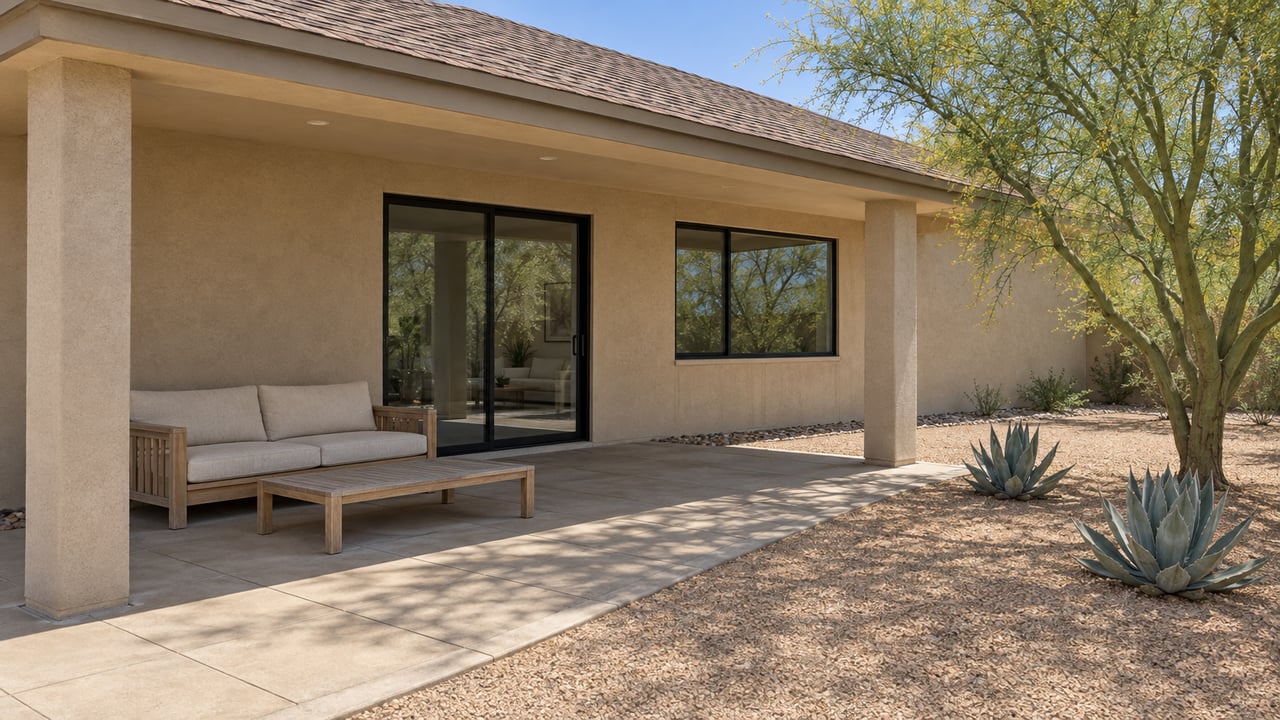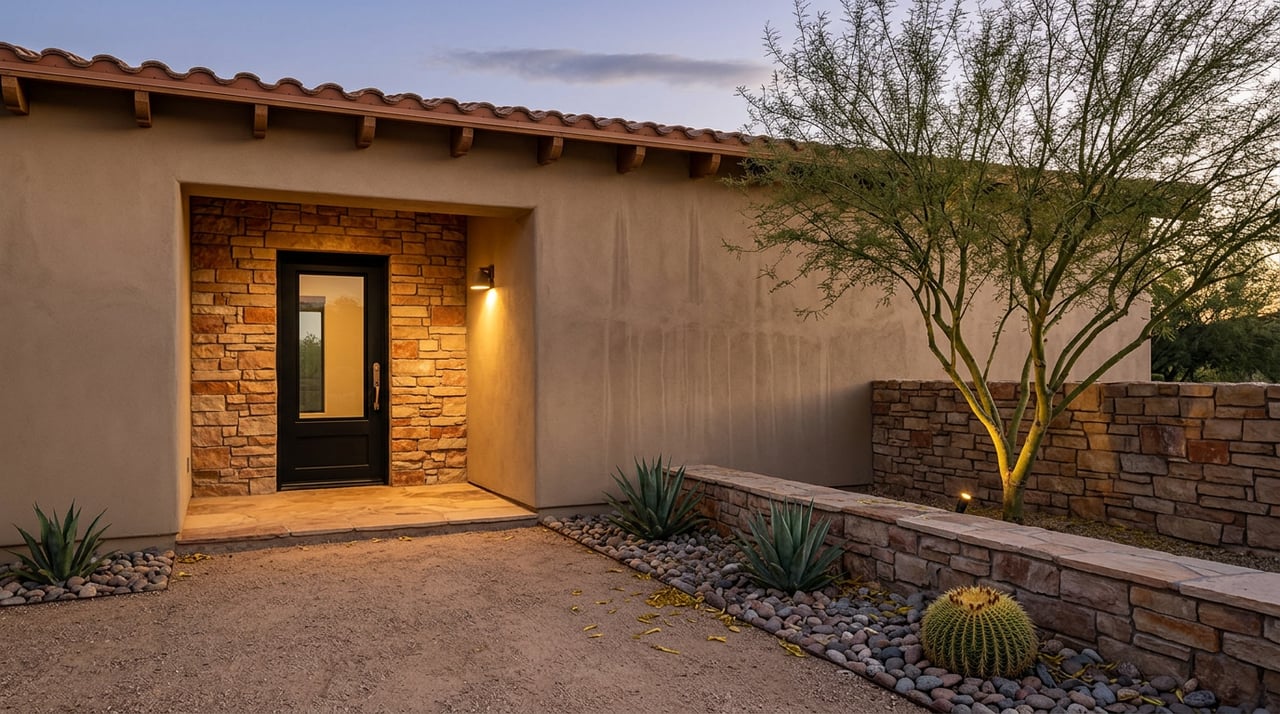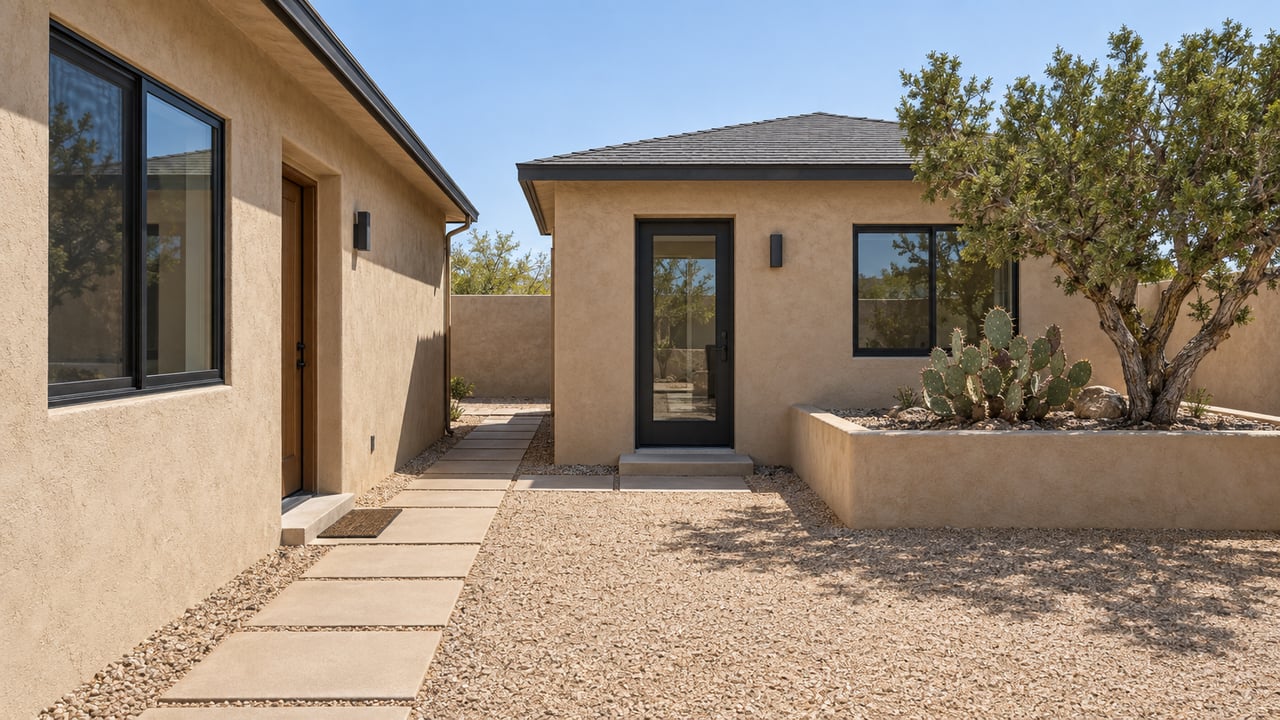
An investor calling about a listing near Uptown described it the way the flyer described it: main house plus casita, two rental streams, one HOA-free parcel. The math looked clean until the question came back the other way. Who's living in the main house?
That question is the whole deal now. Sedona passed an ordinance in September 2024 that says an accessory dwelling unit issued a certificate of occupancy on or after September 14 of that year cannot be used as a short-term rental unless the property owner's primary residence is the main structure on the same parcel. If you're not planning to live there, the casita isn't a second listing. It's a guest room you can't legally rent by the night, unless it happens to carry documented STR use from before the ordinance took effect, which The Short Term Shop says may be grandfathered in.
The Casita Clause That Changes the Math
This is the detail that separates a pro forma from a permit application. A property marketed as generating two income streams only works that way under a specific condition: owner-occupancy of the main house. Buy it as a pure investment, plan to run both units remotely, and the casita side of that spreadsheet needs to come out. The city layered a second requirement on top in December 2024: every advertised unit, including casitas and ADUs, needs its own individual permit. So even in the scenario where owner-occupancy applies, a main house and casita aren't one listing with one permit. They're two applications, two fees, two renewal cycles.
Neither of these rules shows up in a listing description. They show up in the City of Sedona Community Development Department's short-term rental page, and they're the first thing worth checking before anyone gets attached to a floor plan.
The Bill Cities Wanted Was Narrowed Before the House Voted
Arizona has run the same legislative fight for a decade. State law, Senate Bill 1350, passed in 2016 and stripped cities of the power to ban short-term rentals or restrict them purely by classification. What cities can do is regulate operations: permits, insurance, notification, enforcement. Sedona has used every inch of that authority. What it can't do, and what several communities have wanted for years, is cap the number of permits or set distance requirements between rental properties.
This year, Rep. Selina Bliss introduced House Bill 2429 to expand that toolkit, as KJZZ reported. Cities wanted permit caps and minimum distances between STRs. They didn't get them. The Arizona Association of Realtors and Airbnb opposed those provisions hard enough that Bliss pulled them before the bill could pass the House, keeping only a narrower set of tools: a two-adults-per-sleeping-area occupancy formula and an easier path to suspending permits for repeat violators. The same KJZZ report quoted Bliss putting it plainly to her colleagues on the floor.
"Folks, this is as good as it's going to get."
That was the compromise version. It passed the House in March 2026.
The Session Closed Without a Senate Hearing
The Sedona Red Rock News reported that the bill did not receive a Senate committee hearing. It was not on the agenda of the Regulatory Affairs and Government Efficiency Committee or the Appropriations Committee before the session's deadlines passed, and by late April it was likely dead. The Sedona Red Rock News quoted Bliss about the outcome.
"I pushed to the very end, I did everything strategically possible given the timeframe, and that's how it ended."
According to Arizona Capitol Times, she's already talking about a 2027 version. But as of today, nothing changed. No occupancy cap exists. No permit cap exists. No minimum-distance rule exists. The version of HB 2429 sent to the Senate this year was already the narrower compromise, and it did not advance.
If you've read anywhere that Sedona could soon limit occupancy or throttle new STR permits through pending legislation, that legislation is dead for this session. The permit-cap and minimum-distance provisions were removed during the House process to secure votes, and the narrower occupancy and suspension provisions that remained did not advance in the Senate.
What That Leaves Standing
Take the legislative threat off the table and what's actually constraining Sedona's STR supply is the ordinance already sitting in the code since September 2024. It doesn't cap permits directly, because state preemption still forbids that. It caps the pipeline feeding new permits by cutting off the easiest source of incremental inventory: converting a spare casita into a second rental. New supply now has to come from buyers converting an existing full home into an STR, which carries the entry cost of an entire house, or from ground-up construction, which is bounded by available lots.
That's a quieter mechanism than a legislative cap, but it's arguably a more durable one. A permit cap requires the legislature to act and can be reversed by the next session. An ownership-occupancy requirement written into city code just sits there, filtering every ADU conversion one property at a time, with no vote required to keep it in force.
The Numbers That Matter More Than the Legislature
Sedona had 1,113 active short-term rental listings in 2021. As of February 2026, that number sits at roughly 1,805, a 62% increase against a permanent population of about 10,300 residents. Over that same stretch, average daily rate climbed from $353 to $440 while occupancy slid from 68% to 53%. More listings splitting a demand pool that hasn't grown as fast pushes occupancy down even as pricing power holds.
The seasonal pattern matters for anyone underwriting a purchase. Spring, specifically March and April, is Sedona's strongest occupancy window at around 72%, with March revenue regularly clearing $10,000 for a single listing. Fall, October and November, is the secondary peak at roughly 61% occupancy, and it's when nightly rates actually top out, reaching close to $471 in October. A buyer modeling cash flow off a single blended annual average is modeling the wrong shape of year.
The spread that should get the most attention is the one between operators, not between seasons. Data through early 2026 puts the bottom quartile of Sedona STRs at roughly $2,320 in monthly revenue, a $230 average daily rate, and 27% occupancy. The gap to the top quartile runs to a 3.4x revenue multiple. Same city, same tax rate, same permit cost, wildly different outcomes. That spread is a listing-quality and operations problem, not a market-saturation problem, and it's the difference that shows up first on a debt-service coverage ratio. At Sedona's typical home value near $888,808, a market-average operator lands just under the 1.0 DSCR threshold most lenders want to see. A top-quartile operator clears it without much room to spare.
The Underwriting Checklist for Right Now
Before running numbers on a Sedona STR acquisition, confirm the following against the City of Sedona's current requirements:
- Permit fee: $210 per unit, per year, non-refundable and non-transferable. Arizona law, as WonderGuest notes, caps city permit fees at $250, so Sedona sits under that ceiling.
- Late fees: effective January 1, 2026, renewing 2 to fewer than 90 days late adds a one-time $50 fee; 90-plus days late adds $100. The fee is capped at $100 regardless of how late the renewal runs.
- Application completeness: effective October 23, 2025, any application or renewal submitted with missing or invalid information is automatically denied, not flagged for correction before the fact.
- Liability insurance: a minimum of $500,000 in aggregate coverage per rental unit.
- Neighbor notification: written notice, delivered by certified mail or by hand, to every property adjacent to, directly across from, and diagonally across from the rental, including the permit number and a 24-hour emergency contact. Updates required within five days of any change.
- Special events: banned outright, at any size, for any purpose, including weddings, retreats, and workshops. This is a zero-tolerance rule.
- Tax stack: transient lodging tax runs 13.325% in Yavapai County and 13.90% in Coconino County.
- Enforcement: Sedona runs a 24/7 short-term rental complaint hotline at 928-203-5110, and neighbor complaints remain the most common trigger for an inspection.
None of this requires a legislative session to change. It's already the operating environment.
A Few Questions Worth Asking Before You Close
Does the ADU restriction apply if I already own the property? Ownership alone doesn't exempt an ADU issued a certificate of occupancy on or after September 14, 2024. Existing guest quarters with documented prior short-term rental use may be grandfathered, which is a detail worth confirming in writing before assuming a casita's rental history carries forward to a new owner.
Could HB 2429 come back? Its sponsor has said she intends to reintroduce a version next session. Nothing currently pending has passed, and the provisions that would have mattered most to supply, permit caps and minimum distances, were removed before the compromise version passed the House.
Does the special event ban apply to small gatherings? Yes. The city's language covers events of any size, and there's no threshold below which a gathering is treated as personal use rather than a special event.
Running the numbers on a specific Sedona property, whether it's a straightforward single-family STR or one of the main-house-plus-casita listings that need a closer read, is exactly the kind of underwriting call worth making before an offer goes in rather than after. LuxListingAZ works through that math with buyers and current owners across Sedona's STR market. Let's Connect and schedule a strategy call before your next Sedona acquisition.
This article is general information, not legal, tax or financial advice. Consult a qualified professional about your situation.