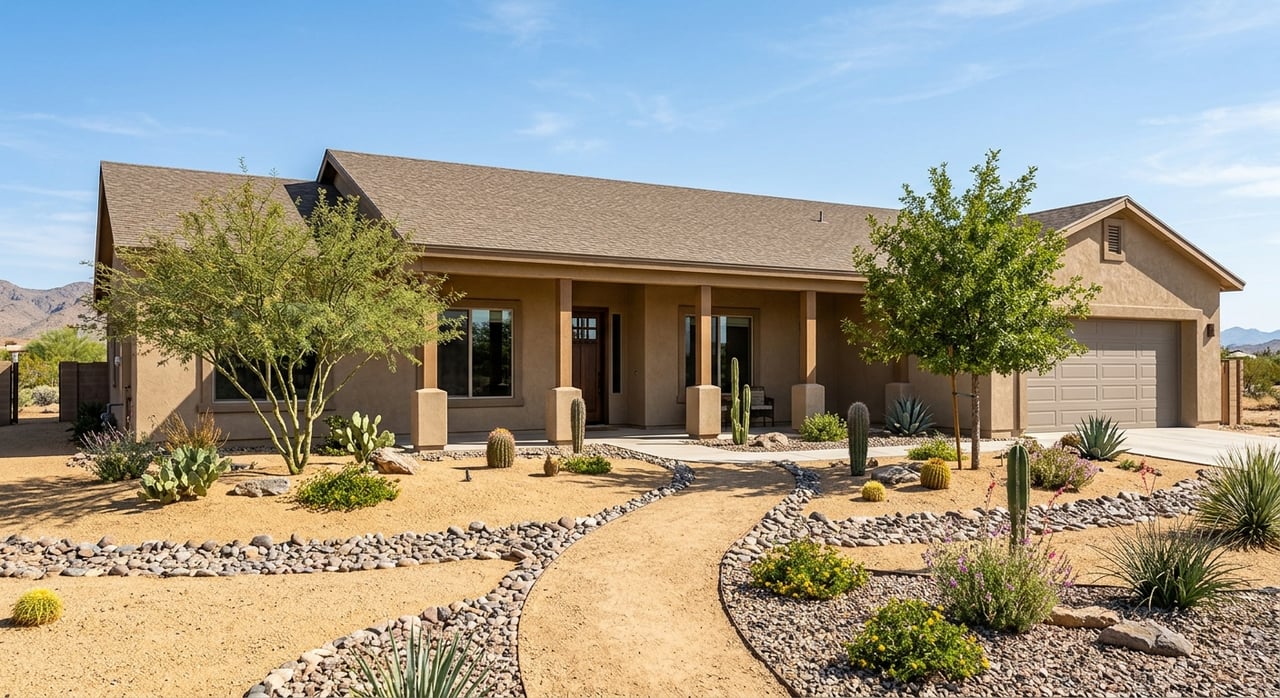
If you are looking at single-family rental opportunities in Peoria, the numbers tell a more balanced story than the usual Sun Belt hype. This is not a market where one citywide rent figure or one appreciation headline gives you the full picture. If you want to buy well, you need to understand where detached homes fit, what public rent benchmarks really mean, and how submarket differences can change the math. Let’s dive in.
Peoria Rental Market at a Glance
Peoria is a large Phoenix-area suburb with an estimated population of 199,924 as of July 1, 2024, according to the U.S. Census Bureau QuickFacts. The same source shows a 76.0% owner-occupied housing rate, which points to a market where ownership dominates and rentals make up a smaller, but still meaningful, share of housing.
That matters if you are evaluating long-term rental demand. In an owner-heavy market like Peoria, the single-family rental opportunity is less about dense renter volume and more about well-located suburban homes that can compete for residents looking for more space and a traditional neighborhood setting.
Why Single-Family Homes Lead
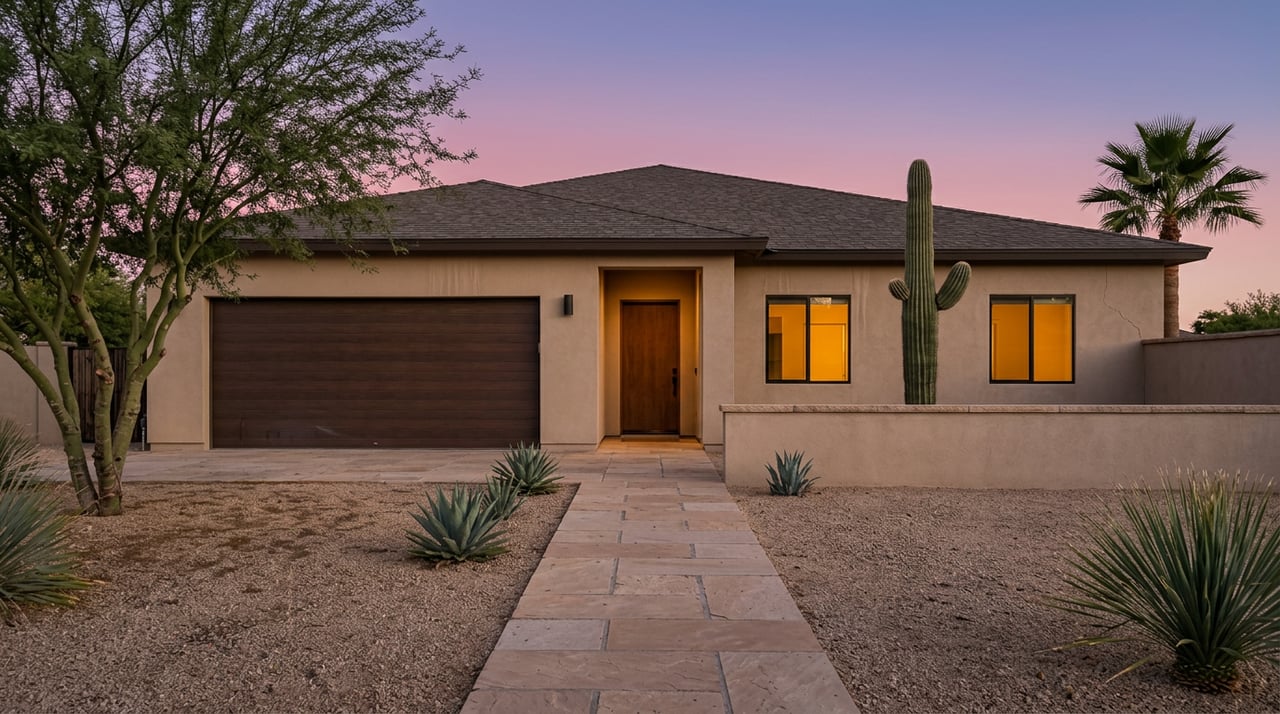
Peoria’s land-use framework helps explain why detached homes are the main product to watch. The city’s planning documents describe low-density residential areas as the place for detached single-family homes, while medium- and higher-density categories include attached housing, townhomes, condos, and apartments, as outlined in the City of Peoria land-use framework.
For investors, that means the core rental thesis in Peoria is usually centered on detached suburban homes. Townhomes and condos still matter, but they often work better as pricing comparisons or lower-entry alternatives than as the main single-family rental play.
Home Values Shape the Opportunity
Public home-value benchmarks place Peoria in the mid-to-upper $400,000s. The Census Bureau reports a median owner-occupied home value of $463,600, while Zillow’s Peoria home values page shows an average home value of $488,596 as of March 31, 2026.
Zillow also reports homes going pending in around 30 days. That suggests an active market, but not one that appears overheated by public benchmarks. For a buyer screening rentals, that can support a more disciplined approach instead of rushing to chase deals.
What Rents Look Like in Peoria
One of the biggest mistakes you can make in Peoria is using one rent number for every property type. Public sources show that pricing changes a lot based on bedroom count, housing type, and location.
According to Zillow’s rental market trends for Peoria, the average rent across all bedrooms and property types is $2,300. The same page reports average rents of $1,793 for 2-bedroom units and $2,221 for 3-bedroom units, with 443 available rentals.
A separate benchmark from Apartments.com’s Peoria rent data shows average rents of $1,399 for apartments, $2,026 for townhomes, and $2,502 for houses. That comparison is helpful because it reinforces where detached homes typically sit in the market. Houses command a premium over apartments and usually above townhomes, which is why they remain the main asset class to analyze for long-term single-family rental opportunities.
Peoria Rent Ranges Matter More Than Averages
For real underwriting, ranges are more useful than citywide averages. The public data suggests that smaller or attached homes often fall in the mid-$1,000s to low-$2,000s, while typical 3-bedroom detached homes often land in the low-$2,000s to low-$3,000s depending on condition, size, and submarket.
Larger 4-bedroom homes in stronger parts of Peoria can push much higher. That is why a broad average can be misleading, especially when newer or higher-end inventory pulls the mean upward.
ZIP Code Differences Are Significant
Peoria is not one uniform rental market. Public rent benchmarks from HUD’s FY2026 Small Area Fair Market Rent schedule show meaningful variation across zip codes.
Here is a quick look at the published 2-, 3-, and 4-bedroom benchmarks:
| Peoria ZIP Code | 2-Bedroom FMR | 3-Bedroom FMR | 4-Bedroom FMR |
|---|---|---|---|
| 85345 | $1,790 | $2,390 | $2,650 |
| 85381 | $1,900 | $2,530 | $2,810 |
| 85382 | $2,130 | $2,840 | $3,150 |
| 85383 | $2,670 | $3,560 | $3,950 |
These are not asking rents, but they are useful for screening because they show how much rent support can shift across the city. If you are comparing two homes with similar square footage but in different zip codes, the expected rent profile may be very different.
Neighborhood Pricing Varies Too
Neighborhood-level value differences add another layer. Zillow’s Peoria market data shows examples such as Cibola Vista around $510,538, Westwing Mountain around $667,997, and Pleasant Valley and Florenza in the mid-$800,000s on its Peoria home values page.
That spread matters because acquisition cost, renovation scope, and rent support do not move in lockstep. A higher-priced neighborhood may offer stronger nominal rent, but that does not automatically mean better yield. In many cases, the entry basis is what determines whether the deal still works.
Cash Flow in Peoria Is Usually Disciplined
Peoria does not read like a pure high-yield market based on current public data. A simple gross-yield screen helps frame the opportunity.
Using the Census median owner-occupied value of $463,600 and median gross rent of $1,843 implies a gross yield of about 4.8%, based on the Census QuickFacts data. Using Zillow’s $2,300 average rent implies about 6.0%, while using Apartments.com’s $2,502 average for houses implies about 6.5%.
Those are gross figures only, so they are not a substitute for full underwriting. Still, they suggest an important takeaway: Peoria can work for cash flow when your basis is disciplined, but public data does not point to an easy cash-flow bargain across the whole city.
Appreciation Is Still Part of the Story
Peoria still has an appreciation angle, but recent momentum has been more subdued than many investors expect. On Zillow’s home values page, average home values are down 1.6% year over year, while Zillow’s rent trend data also points to very flat rent growth.
Zillow’s Zillow Observed Rent Index for Peoria shows an average rent of $1,849 as of March 31, 2026, with just 0.1% year-over-year change. Because that metric adjusts for changes in rental inventory quality, it is not directly comparable to asking-rent averages, but it does support the broader conclusion that recent rent growth has been essentially flat.
For investors, that means a Peoria buy should usually be evaluated as a combination of cash flow, long-term hold potential, and careful basis selection. It is not the kind of setup where recent public data supports aggressive assumptions on near-term growth.
What to Screen First
If you are evaluating single-family rental opportunities in Peoria, start with the factors that most directly affect performance:
- Property type: Detached homes are usually the clearest fit for the market’s suburban rental profile.
- ZIP code: Public rent benchmarks vary a lot from 85345 to 85383.
- Entry basis: In Peoria, purchase price discipline often matters as much as projected rent.
- Bedroom count: Typical 3- and 4-bedroom layouts often align best with the local detached-home rental pool.
- Comparable product: Use townhomes and condos as comparison points, but do not confuse them with detached-house performance.
- Rent assumptions: Underwrite to realistic ranges, not a single citywide average.
This kind of market rewards precision. A decent-looking property can underperform if the rent story is overstated or the acquisition price leaves no room for error.
A Practical Market View for Investors
The cleanest way to think about Peoria is as a balanced Phoenix-suburb rental market. It offers enough rent support to justify long-term single-family rentals, especially for detached homes, but current public data does not suggest outsized cash flow at the citywide median.
That is why local analysis matters. In a market with wide variation by neighborhood and zip code, the best opportunities are often found by matching the right basis, the right home type, and the right rent expectations instead of chasing the highest headline number.
If you want a finance-first view of where a Peoria rental may fit your investment goals, Anthony Escobar can help you evaluate acquisition opportunities with a practical lens on pricing, positioning, and long-term performance.
FAQs
What is the average rent for single-family rentals in Peoria, AZ?
- Public sources vary by methodology, but Zillow reports an average rent of $2,300 across all bedrooms and property types in Peoria, while Apartments.com reports an average of $2,502 for houses specifically.
Are Peoria, AZ single-family rentals good for cash flow?
- Peoria can support cash flow, but current public data suggests it is generally a disciplined-basis market rather than a high-yield market, with rough gross-yield screens landing around 4.8% to 6.5% depending on the rent benchmark used.
Which Peoria ZIP codes show stronger rent support?
- HUD’s FY2026 Small Area Fair Market Rent data shows higher rent benchmarks in 85383 than in 85345, 85381, or 85382, which highlights how much rental support can vary across Peoria.
What property type is most relevant for Peoria rental investors?
- Detached single-family homes are the main product to analyze in Peoria, while townhomes and condos are often more useful as lower-entry alternatives or pricing comparables.
Is rent growth strong in Peoria, AZ right now?
- Recent public data suggests rent growth has been very flat, with Zillow’s Zillow Observed Rent Index showing just 0.1% year-over-year change as of March 31, 2026.
Do Peoria neighborhoods vary a lot for rental investing?
- Yes. Public home-value data shows meaningful variation across Peoria neighborhoods, which can affect entry price, rent support, and overall investment math.