Thinking about buying or selling in Peoria and wondering what could make or break your appraisal? You’re not alone. Appraised value drives loan approvals, pricing power, and negotiation leverage. In this guide, you’ll learn how appraisals work, what affects value in Peoria, and how to prepare so you protect your bottom line. Let’s dive in.
What an appraisal is and why it matters
An appraisal is a licensed appraiser’s unbiased opinion of market value on a specific date for a specific property. Lenders use it to verify that the home supports the loan amount. Appraisers follow national ethics and standards under USPAP, which are set by The Appraisal Foundation.
An appraisal is not a home inspection. An inspection focuses on condition and safety; an appraisal analyzes market value. It also differs from a Comparative Market Analysis an agent might prepare. A CMA helps set list price, but an appraisal must meet lender and standards-based requirements.
How appraisers determine value
Appraisers choose methods based on the property type and available data, then reconcile to a final value.
Sales comparison approach
This is the primary method for Peoria homes. The appraiser selects recent closed sales in your neighborhood that are similar in size, age, condition, lot, and amenities, then adjusts for differences. Lender requirements commonly reference the Fannie Mae Selling Guide.
Cost approach
For newer or unique homes, the appraiser may estimate what it would cost to rebuild the property today, subtract depreciation, then add land value. This approach helps when there are few comparable sales.
Income approach
If a home is used as a rental or analyzed as an investment, the appraiser can consider potential income. This method is more common for investment properties than for typical owner-occupied homes.
For certain loans, appraisers also follow federal guidance, such as the HUD/FHA Single Family Housing Policy Handbook when applicable.
Peoria factors that affect value
Peoria sits within Maricopa County and includes a mix of master-planned communities, golf and lake-adjacent neighborhoods, and established subdivisions. Here’s how value drivers often show up locally.
Market trends and comps
Closed sales in your immediate area are the strongest drivers of value. Appraisers prioritize similar homes closed in the past 3 to 6 months and will expand the search only if necessary. Rising or softening market trends influence how older comps are weighed.
Neighborhood and access
Subdivision consistency matters. Communities near Loop 101 and Loop 303, retail centers, parks, and recreation like the Lake Pleasant area and the Peoria Sports Complex often see stronger demand due to convenience. Proximity to high-traffic roads or notable noise sources can lead to downward adjustments.
Appraisers also consider school district data in a neutral way because some buyers factor it into decisions. The analysis focuses on how comparable sales within the same district or nearby areas have performed.
Site and outdoor space
Lot size, orientation, and usable outdoor space influence value. Corner or pie-shaped lots can help or hurt depending on privacy and usability. Desert views or mountain vistas are positives, while limited usability may reduce adjustments.
Condition and systems
Square footage must be accurate and measured consistently. Beyond age, appraisers consider the home’s effective age based on updates to major systems. In Arizona, the condition and age of HVAC, roof, water heater, plumbing, and electrical systems carry real weight because they impact operating costs.
Upgrades and permits
Renovations reflect best in value when they align with neighborhood standards and are permitted when required. Kitchens and bathrooms usually return more value than purely cosmetic updates. Appraisers verify improvements through records where possible; you can help by documenting upgrades and permits with the City of Peoria Planning and Development documentation.
Energy and solar
Efficiency upgrades can support value when they lower ownership costs and align with buyer expectations. For solar, ownership structure is key. Owned systems with documentation have clearer value impact than leased systems or PPAs, which may affect lending and appraisal treatment.
Pools and landscaping
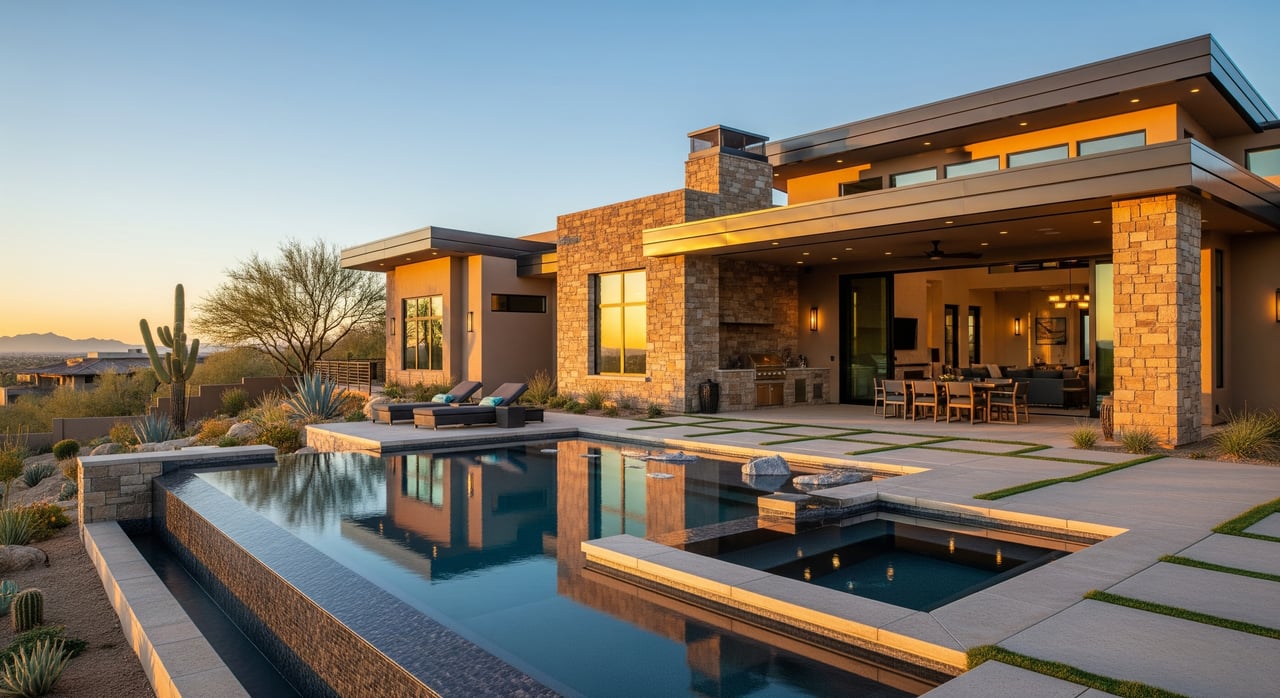
In Phoenix-area markets like Peoria, pools can be a plus, especially in neighborhoods where they’re common. Appraisers look to comps to determine typical adjustments. Low-maintenance xeriscaping and functional outdoor areas are often viewed favorably because they reduce water and upkeep.
HOA and community features
Gated entries, golf access, community pools, and parks can support value and marketability. Appraisers consider HOA dues in relation to the benefits offered and how that compares to nearby comps.
Legal and title flags
Easements, encroachments, or limited access can reduce usable area or create buyer concerns. Appraisers may consult county records to confirm details, including the Maricopa County Assessor for parcel and tax data.
Environmental and flood considerations
Peoria includes washes and areas with specific floodplain designations. Appraisers check flood risk through resources such as the FEMA Flood Map Service Center, since higher flood risk can affect insurance costs and buyer demand.
The appraisal process and timeline in Peoria
Most lender-ordered appraisals follow a consistent workflow:
- Lender orders the appraisal.
- Appraiser schedules and performs a property inspection.
- Appraiser researches comps and local records.
- Adjustments and analysis are completed; the report is delivered to the lender.
Turnaround is commonly 3 to 7 business days, but timing can vary with market volume and loan type. FHA or certain assistance programs may require extra steps.
What the appraiser documents
- Exterior: lot and site, visible structure, roof and surface condition, driveway and pool equipment, and outbuildings.
- Interior: room count, layout, living area, and observable condition of major systems.
- Photos: exterior, street scene, main interior rooms, and comparable sales when allowed.
- Records: sales history, permits, and public information from sources like the City of Peoria permits portal and the Maricopa County Assessor.
Where appraisers verify information
- Local MLS for closed comparable sales.
- County and city records, including the Maricopa County Assessor and the City of Peoria.
- Flood status via the FEMA Flood Map Service Center.
- Professional standards and best practices via the Appraisal Institute and The Appraisal Foundation.
Seller checklist to get appraisal-ready
A well-prepared property and file can help the appraiser verify value-supported features quickly and accurately.
Gather essential documents
- A list of improvements with dates, scope, cost, and permit numbers.
- Receipts and warranties for roof, HVAC, water heater, and major repairs.
- A concise packet of recent closed comps your agent believes are most similar.
- HOA documents, including CC&Rs, fee schedule, and amenities list.
- Survey or plat if available, plus any transferable warranties (roof, termite, pool equipment).
- Solar paperwork showing ownership, production history, and any finance or lease terms.
Prepare the property
- Ensure the appraiser can access mechanicals, electric panel, attic, and all rooms.
- Tidy, declutter, and handle small fixes like broken lights or sticking doors.
- Address safety issues flagged by a recent inspection if feasible.
- Provide a simple folder or digital packet through your agent, who can deliver it per lender protocol.
Avoid common pitfalls
- Relying on active or pending listings instead of closed sales.
- Concealing unpermitted work. It’s better to disclose and document.
- Skipping permit proof for impactful upgrades that could support a higher quality rating.
If you hired contractors for recent work, verify licensing at the Arizona Registrar of Contractors and keep that documentation handy.
Buyer playbook if the appraisal comes in low
A low appraisal doesn’t have to derail your purchase. Take a systematic approach.
- Review for errors: Confirm bedroom count, gross living area, lot size, and improvements are correct.
- Provide better comps: Ask your agent to submit recent, truly comparable closed sales to the lender for reconsideration.
- Clarify improvements: Supply missing documentation for upgrades, permits, and warranties.
- Negotiate solutions: Options include price adjustments, seller credits, or bringing additional funds. Your lender can outline loan-specific paths.
Common appraisal myths in Peoria
- “The appraiser will match the list price.” They must independently conclude value from comps, even if it differs from list or contract.
- “A pool always increases value.” Pools add value when typical in the neighborhood; in some segments, maintenance costs limit adjustments.
- “Cosmetic updates guarantee higher value.” Without structural or systems improvements, the value impact may be modest.
- “Solar always boosts value.” Owned systems with clear documentation often help. Leased systems or PPAs can complicate lending and valuation treatment.
- “Appraisals are automated.” Most loans still require a licensed appraiser; automated tools may be used, but they do not replace a full appraisal for many transactions.
Local resources to verify facts
- Standards and ethics for appraisals: The Appraisal Foundation.
- Lender requirements for conventional loans: Fannie Mae Selling Guide.
- FHA policy references: HUD/FHA.
- Property records and tax data: Maricopa County Assessor.
- Permits, zoning, and planning: City of Peoria.
- Flood zones and maps: FEMA Flood Map Service Center.
- Contractor license checks: Arizona Registrar of Contractors.
- Professional education and best practices: Appraisal Institute.
- Consumer resources and licensing: Arizona Department of Real Estate.
Ready to position your appraisal for success? If you want a pricing strategy grounded in comps and a clear prep plan tailored to your Peoria property, connect with Anthony Escobar. You’ll get finance-forward guidance, local market insight, and a step-by-step approach that protects value.
FAQs
How do appraisers pick comparable sales in Peoria?
- Appraisers prioritize closed sales within the same or similar subdivision from the last 3 to 6 months, matching size, age, condition, lot, and amenities as closely as possible.
Do pools typically increase appraised value in Peoria?
- Pools often add value when they are common in nearby comps; where pools are less typical or maintenance costs outweigh demand, the adjustment may be limited.
How do unpermitted room additions impact appraisal value?
- Unpermitted space is often excluded from gross living area and may be noted as nonconforming, which can lead to negative adjustments or reduced reliance on that area.
What should I do if the appraised value is below my contract price?
- Check the report for factual errors, provide stronger closed comps through your agent, document upgrades, and explore renegotiation or additional down payment options with your lender.
Which records help verify value-related items in Peoria?
- Use the Maricopa County Assessor for parcel data, the City of Peoria for permits and zoning, and FEMA’s Flood Map Service Center for flood status; gather receipts and warranties for recent improvements.