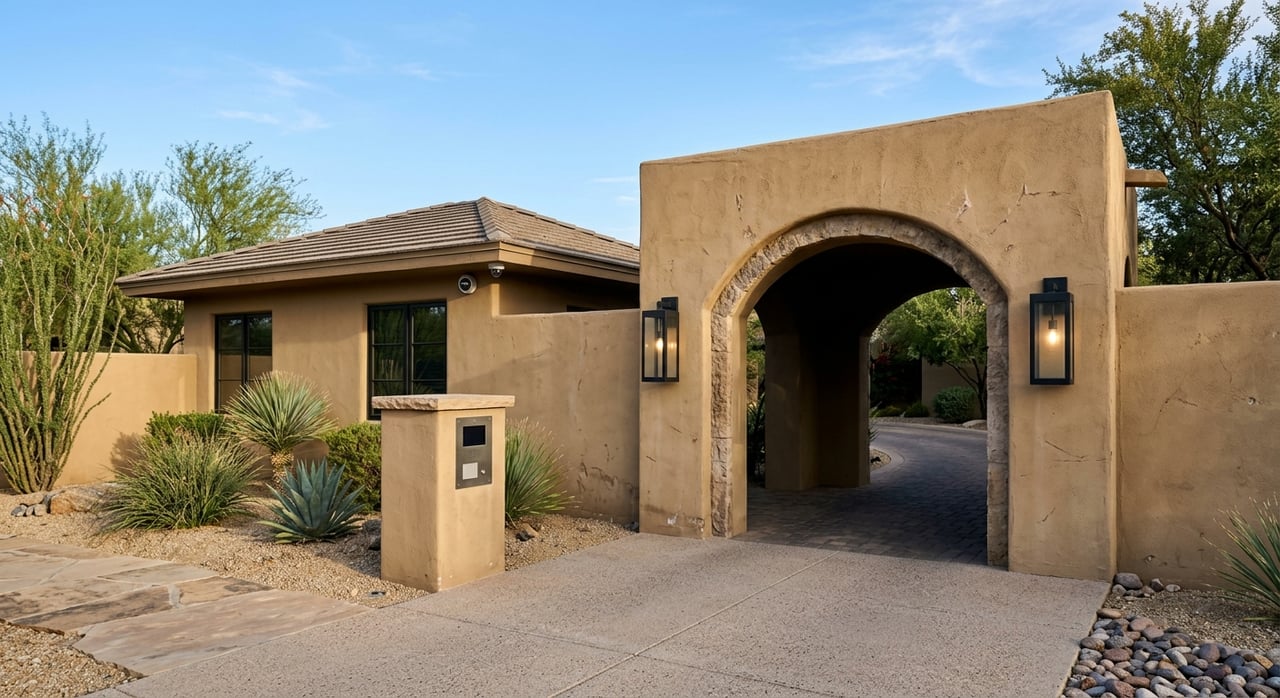
Shopping Scottsdale gated communities can feel simple at first, until you realize that “gated” can mean very different things. You may be comparing a guard-gated luxury enclave, a trail-oriented custom home community, or a neighborhood where club access is separate from ownership. If you want to make a smart decision, you need to look past the gate itself and evaluate how the community actually functions. Let’s dive in.
Start With What “Gated” Really Means
In Scottsdale, gated communities are not one-size-fits-all. Community descriptions show a wide range of models, from Stonegate’s gate-guarded master-planned setup with resident recreation amenities to Sincuidados’ custom-home desert setting on 1+ acre lots, to Mirabel and Silverleaf, where privacy and club-oriented living play a major role.
That matters because the word gated does not tell you enough on its own. A community may offer privacy and entry control, but the day-to-day experience, cost structure, and lifestyle can be very different from one neighborhood to the next.
Compare the Security Model
One of the smartest ways to evaluate Scottsdale gated communities is to compare the security setup, not just whether a gate exists. A basic access gate is very different from a staffed guard gate or a community with active patrols and guest management.
For example, DC Ranch’s published security guide outlines an operational model that includes gatehouse access, guest preauthorization, contractor passes, package handling, and vacation perimeter checks. Mirabel also states that it has 24/7 security staff, roving patrol, and gate monitoring through a web-based system.
Questions To Ask About Security
When you tour a community, ask specific questions such as:
- Is the entrance simply controlled by a code or remote access?
- Is there a staffed guard gate?
- Are there roving patrols?
- How are guests preauthorized?
- How are vendors and contractors handled?
- Are package or home-watch services part of the setup?
These details shape both your daily convenience and your long-term value proposition. A well-run security system can support buyer appeal more than a gate alone.
Separate HOA Amenities From Club Access
This is one of the biggest areas where buyers get tripped up. Some communities include amenities through the HOA, while others have a private club structure that is separate from homeownership.
Mirabel clearly states that club ownership is separate from home ownership. That means you should not assume golf, dining, or club access comes with the property unless it is specifically confirmed.
Stonegate offers a more community-based amenity package with a clubhouse, sports courts, and recreation facilities for residents and their guests. By contrast, communities like Silverleaf and Mirabel may blend homeowner benefits with club-centered amenities that can involve separate costs or eligibility.
What To Confirm Before You Buy
Before moving forward, verify:
- Which amenities are included in HOA dues
- Which amenities require separate membership
- Whether membership is optional or required
- Whether there are initiation fees or waiting lists
- Whether guests can use certain facilities
This matters for both lifestyle fit and budgeting. A community may look ideal on paper, but the actual access model could change the economics significantly.
Review HOA Documents Carefully
In Arizona, planned communities and condominiums follow different legal structures. A planned-community association is created under a declaration and funded by assessments, while a condominium is a separate form of ownership in which units are individually owned and common elements are shared.
For buyers, the key takeaway is simple: review the association documents closely before you commit. Arizona resale disclosure laws require important association information to be provided, and the association may charge up to an aggregate $400 for the transfer-related disclosure package.
Key HOA Items To Review
Ask for and review:
- Declaration
- Bylaws
- Rules and regulations
- Current assessment amount
- Any unpaid assessments
- Reserve balance
- Insurance coverage
- Any disclosed violations or unapproved alterations
This is where you learn how the community operates beyond the brochure. It also helps you spot future costs, restrictions, or administrative issues before they become your problem.
Check Meeting Minutes And Board Process
Arizona law requires open meetings for both planned-community and condominium associations, with notice and agendas provided in advance. That makes board behavior and meeting minutes useful due diligence tools.
If you want a clearer picture of a gated community, read recent meeting minutes when available. They can reveal how the board handles maintenance, rule enforcement, budgeting, and owner concerns.
A polished entrance and attractive common areas are great, but governance matters too. Communities with organized communication and visible process often give buyers more confidence.
Understand Use Restrictions Early
Lifestyle restrictions can affect your enjoyment of the property and your resale options later. The Arizona Department of Real Estate notes that CC&Rs can restrict things like landscaping, RV parking, play equipment, satellite antennas, and other common features.
If you are buying new construction, the Arizona Department of Real Estate says the Public Report must be delivered before the purchase contract is signed. That report, along with the CC&Rs, helps you understand what is and is not allowed before you commit.
Restrictions That Deserve Extra Attention
Pay close attention to rules covering:
- Exterior changes and design approval
- Landscaping requirements
- Parking restrictions
- Short-term or long-term rental rules
- Guest occupancy limits, if any
- Age-restricted occupancy requirements, if applicable
Rules are not inherently good or bad. The real question is whether they fit how you plan to use the home.
Verify Rental Flexibility If It Matters
If rental flexibility is part of your strategy, verify the rules before you buy. Arizona statutes allow associations to collect limited rental disclosures, and age-restricted communities have additional tenant ID verification requirements.
For some buyers, this is a minor point. For others, especially second-home owners and investors, it belongs near the top of the checklist.
A gated community that fits your lifestyle today but limits future leasing options may reduce flexibility later. That is why this question should be answered early, not after you are under contract.
Think About Resale, Not Just Lifestyle
Buyers often assume a gated community will automatically command a premium. Research suggests the picture is more nuanced.
A 2022 study found higher prices in communities with gates, guards, or guards and patrols, but the premium was not driven by the gate alone. Earlier research also found that gated-community premiums can exist, but they may fade after market downturns and can be offset by higher infrastructure and service costs.
The practical lesson is clear: resale value tends to benefit when the community offers a strong, well-managed package. Security operations, useful amenities, and reasonable carrying costs often matter more than branding alone.
Evaluate Carrying Costs Against Buyer Appeal
When you compare Scottsdale gated communities, think like both an owner and a future seller. Ask whether the gate, amenities, and HOA rules broaden the buyer pool or narrow it.
Communities with clear upkeep, manageable dues, and flexible use patterns often appeal to a wider range of buyers. Communities that depend on a narrow club lifestyle or a very high-cost amenity stack may fit some buyers extremely well, but they can also reduce flexibility on resale.
In Scottsdale’s current market, that distinction matters. Recent 2026 data from Redfin, Zillow, and Realtor.com points to a balanced or somewhat competitive market, with median prices and days on market varying by source but all suggesting conditions that reward thoughtful pricing and strong positioning rather than assuming instant demand.
Use A Simple Shortlist Framework
If you are touring multiple communities, keep your comparison process simple and consistent. A structured framework can help you avoid being swayed by one impressive entrance or clubhouse.
Five Filters To Use
- Security model: Compare staffed gates, patrols, visitor controls, and operational details.
- Amenity fit: Focus on the features you will actually use, such as trails, tennis, pickleball, clubhouse access, golf, spa, or open space.
- HOA economics: Review dues, reserves, insurance, and any signs of special-assessment risk.
- Ownership structure: Confirm whether club access is included or separate, and whether rental or occupancy rules limit flexibility.
- Resale liquidity: Ask whether the lifestyle package is broad enough to support future buyer demand.
This approach helps you compare communities with more discipline. It also keeps your decision tied to real-world use, cost, and long-term value.
How A Data-Driven Buyer Should Approach Scottsdale
The best community for you is not always the one with the most amenities or the most recognizable name. It is the one where the security model, ownership structure, rules, and monthly costs line up with how you actually plan to live or invest.
That is especially true in Scottsdale, where gated communities range from custom desert enclaves to amenity-rich master-planned neighborhoods to private club-centered environments. If you evaluate them through a clear financial and lifestyle lens, your shortlist becomes much stronger.
When you want help comparing communities, reviewing tradeoffs, and narrowing the field in a practical way, Anthony Escobar can help you evaluate Scottsdale options with a strategic, on-the-ground perspective.
FAQs
What should you compare when evaluating Scottsdale gated communities?
- Compare the security model, amenity structure, HOA costs, ownership setup, and resale flexibility rather than focusing only on whether the neighborhood has a gate.
How do Scottsdale gated community amenities usually work?
- Some amenities are included through the HOA, while others may require separate club membership, so you should confirm exactly what ownership includes.
What HOA documents should you review before buying in Scottsdale?
- Review the declaration, bylaws, rules, current assessments, unpaid assessments, reserve balance, insurance coverage, and any disclosed violations or alterations.
Why do HOA meeting minutes matter in a Scottsdale gated community?
- Meeting minutes can show how the board handles budgeting, maintenance, rules, and owner concerns, which helps you evaluate how the community is actually managed.
Can rental rules affect your choice in a Scottsdale gated community?
- Yes, if rental flexibility matters to you, verify leasing rules before buying because association policies can limit future use options.
Does a gated community in Scottsdale always have stronger resale value?
- Not necessarily, because resale strength is often tied more to the quality of security operations, useful amenities, manageable dues, and broad buyer appeal than the gate alone.