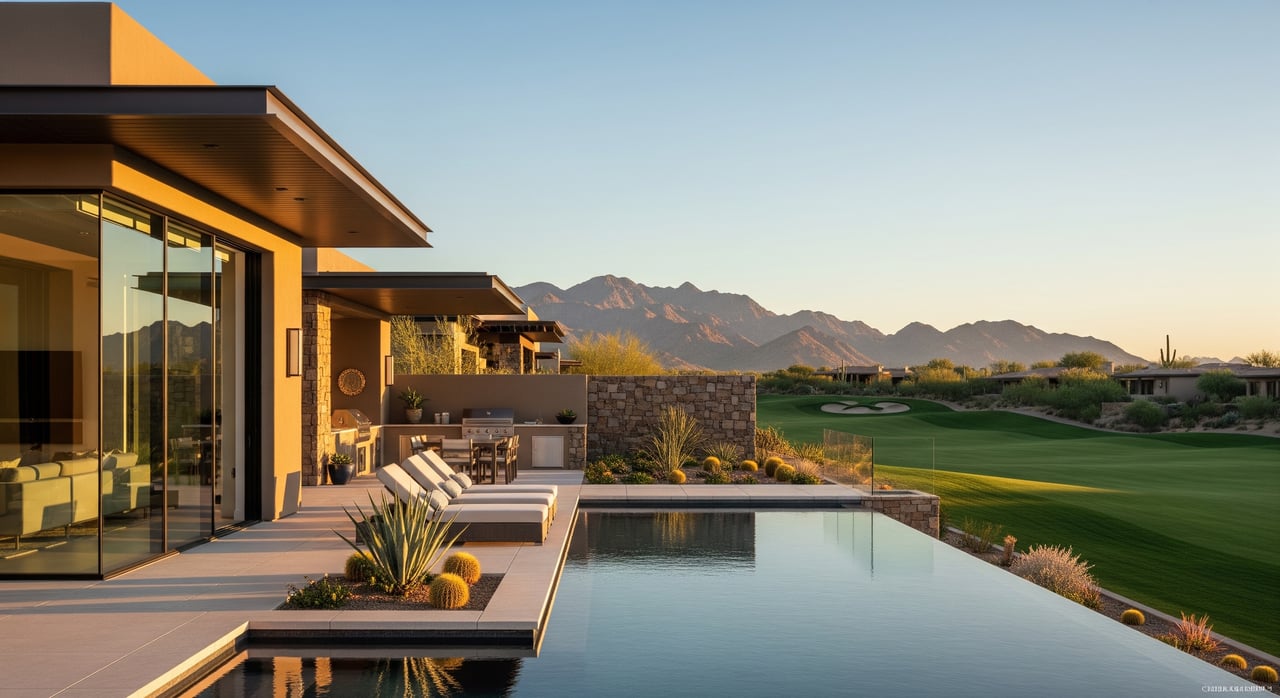
Do you picture crisp fairways at sunrise and McDowell Mountain views from your patio? Living on a Scottsdale golf course can deliver that daily, but it also comes with rules, rhythms, and costs you should understand upfront. If you want a clear look at how the lifestyle works, what it costs, and how to protect your investment, you’re in the right place. Let’s dive in.
What golf-course living means
Scottsdale has a broad mix of golf communities, each with its own norms and financial commitments. Your experience depends on how the course is owned and operated, and where your home sits within the development.
Community types at a glance
- Public-course neighborhoods: The course is open to the public. You may have optional memberships and less control of tee-time traffic. Homeowner obligations tied to golf operations are usually limited.
- Resort-style developments: The course is part of a resort. Expect visitor traffic, on-site events, and a steady social calendar. Access and member benefits vary.
- Private club communities: Membership is required or strongly encouraged. These are typically gated with higher initiation fees, monthly dues, and curated amenities.
- Golf-front vs. interior lots: Golf-front homes enjoy wide views and open sightlines. Interior lots trade some view for added privacy and less ball impact risk.
Where you’ll find them
- North Scottsdale and McDowell Mountain: Areas like Troon, Desert Highlands, and Silverleaf are known for private clubs and dramatic desert-mountain scenery.
- Central Scottsdale: Places such as McCormick Ranch and Grayhawk offer suburban convenience and community amenities.
- South and Old Town corridors: Smaller course-adjacent pockets place you closer to central services and nightlife.
Daily life through the seasons
Your routine will shift with Scottsdale’s weather and the seasonal population. Plan for an active winter and quieter, heat-managed summer days.
High season rhythm
From late fall through early spring, mornings are prime for golf and trail walks. Clubhouses and fitness centers run full schedules with member tournaments, social clubs, and holiday events. You’ll notice more residents, busier tee sheets, and lively restaurants from November through April.
Summer adjustments
Midday heat limits outdoor activity for many residents. Early mornings and evenings are your best windows for golf, workouts, and patio time. Pools, shaded courtyards, and efficient cooling systems become everyday essentials.
Amenities and community
Most golf communities offer a mix of golf, practice facilities, clubhouses, restaurants, fitness centers, tennis or pickleball, pools, and spa services. The social scene varies by membership model, but you can expect a steady cadence of activities in peak season.
Noise, traffic, and events
Course operations start early. Routine mowing, aeration, and cart-path work typically happen at dawn, which can bring periodic noise and vehicle movement. If the course hosts weddings, tournaments, or public tee times, event traffic, parking, and evening activity can rise. Private clubs often control event frequency more tightly than public or resort courses.
Views, privacy, and wildlife
Golf-front lots trade some privacy for views. Sightlines across fairways feel expansive, but golfers and cart paths can be nearby. Your lot orientation, setback, and buffer landscaping play a big role in privacy and noise levels.
Irrigated turf and ponds create a green corridor that attracts birds and other wildlife. You may see rabbits, coyotes, and occasional reptiles. Water features can draw insects, including mosquitoes, though many communities treat standing water as part of routine maintenance.
Turf care, water, and maintenance
Golf-course quality depends on consistent care. It also means fertilizers and pesticides are used on a schedule. It is smart to ask about application frequency and any community policies on pesticide management.
Overseeding and winter color
Many Scottsdale courses historically overseed warm-season turf with rye in the fall to keep grass green in winter. Overseeding increases water and chemical inputs during cooler months. There is a broader movement in arid regions to reduce or eliminate overseeding to conserve water, so check the specific course’s current policy and how it will affect color and play.
Water use and conservation
Golf courses use more water than desert landscaping. Scottsdale runs conservation programs and regulations that influence course practices and HOA landscaping rules. Drought conditions and changes in regional supplies can lead to adjusted irrigation policies, higher costs, or different course aesthetics. Ask for recent updates from the course and HOA if water policy is a priority for you.
Golf balls and property safety
Stray shots happen. If your home is near a fairway or tee box, inspect for signs of golf-ball impact on windows, stucco, and fencing. Look for protective glazing or upgraded windows. Evaluate whether nets, setbacks, or mature landscaping provide a buffer. Walk the lot lines and stand where your patio furniture might be to see angles of play.
Costs, fees, and resale
Budget for more than a mortgage. Costs often come in layers, and they vary widely by community and membership model.
What to expect financially
- HOA dues: Cover common areas, security, landscaping near course edges, and amenity upkeep. Review current budgets and reserve studies to gauge long-term maintenance planning.
- Club or course membership: Initiation fees, monthly dues, and guest policies differ. Some communities require membership. Others offer optional tiers.
- Special assessments: Clubs and HOAs sometimes levy assessments for course renovations, clubhouse upgrades, or infrastructure.
Taxes, insurance, and resale value
Property taxes and valuations influence carrying costs. For insurance, ask your provider about coverage for golf-ball damage and whether any endorsements are recommended. Golf-front homes often command a premium, but the premium depends on the course’s reputation and the community’s stability. There have been cases in the region where courses were repurposed. Verify land ownership, any development restrictions in the CC&Rs, and whether long-term easements or protections exist to reduce conversion risk.
Legal and governance diligence
Get the paperwork early and read it closely. Your goal is to confirm who owns and operates the course, how the community is financed, and what rights and rules apply to your property.
Documents to request
- HOA: CC&Rs, bylaws, most recent budget, reserve study, and 12 to 24 months of meeting minutes. Ask for a history of violations and any active enforcement.
- Club: Membership agreement, bylaws, initiation policies, dues schedule, transferability, and any assessment history.
- Course: Operator contract if a third party runs the course, plus any long-term land-use agreements or easements.
- Environment: Irrigation and water-rights information, pesticide-use policies, and any environmental assessments.
Field checklist for buyers
Use this practical checklist as you tour and compare homes:
Operations and access
- Confirm whether the course is public, resort, private, or third-party operated.
- Ask about overseeding, aeration, and renovation schedules, and how they affect course color and play.
- Visit at dawn, midday, and evening, and again in winter high season to see real traffic and noise patterns.
Costs and restrictions
- Verify HOA dues, what they cover, and any planned assessments.
- Confirm whether short-term rentals are permitted and under what conditions. Rules vary by HOA and city policy.
- Ask about guest and tee-time priority for residents.
Daily-life realities
- Noise: Check early morning for mowers and carts.
- Privacy: Evaluate sightlines from your patio and interior rooms toward fairways and paths.
- Wildlife and pests: Ask about common species and treatment frequency for insects near water features.
Long-term risk and resale
- Ask directly if there has been any discussion of course closure or redevelopment.
- Review HOA and club minutes for disputes or litigation.
- Understand how active the seasonal rental and second-home market is if resale liquidity matters to you.
Who this lifestyle fits
You will likely love golf-course living if you want immediate access to outdoor recreation, a built-in social network, and distinctive views. If you value predictable quiet at dawn or high privacy, you may prefer an interior lot or a community with tighter control over events and public access. Investors should weigh rental rules, seasonal demand, and any membership obligations that affect holding costs.
Smart next steps
- Clarify your community type: Decide if you prefer private-club control, a resort vibe, or a public-course setting with fewer obligations.
- Align budget and lifestyle: Match HOA and membership dues to how often you plan to use the amenities.
- Validate governance and water: Review CC&Rs, club bylaws, and course water policies before you write an offer.
- Walk the lot: Visit during different times and seasons to test noise, privacy, and golf-ball exposure.
If you want a tailored short list with fee schedules, membership details, and a plan to stress-test each property, reach out. As a finance-trained advisor, I can help you balance lifestyle goals with long-term asset value and, for investors, integrate acquisition-to-operations strategy.
Ready to explore Scottsdale golf-course homes with clear eyes and a strong plan? Connect with Anthony Escobar for a strategy call.
FAQs
Do Scottsdale golf communities require club membership?
- It depends on the community. Some require membership, others offer optional tiers. Always request the current membership policy in writing from the HOA and club.
How private are golf-front lots in Scottsdale?
- Golf-front homes deliver wide views but can have less privacy due to nearby cart paths and play. Lot orientation and buffer landscaping influence privacy.
Are Scottsdale courses crowded in winter months?
- Yes. November through April brings more residents and visitors, which means busier tee sheets, fuller social calendars, and more active clubhouses.
What is the risk a course closes or redevelops?
- There is real risk where land values rise or operations struggle. Verify course ownership, land-use protections in the CC&Rs, and any long-term easements.
Do HOA dues cover golf-club expenses?
- Sometimes. Budgets vary. Review the HOA budget and reserve study to see how funds are allocated, and check for any planned assessments.
Will the course look green all winter?
- Many courses overseed for winter color, but some reduce overseeding to conserve water. Ask the course about current practices and visual impact.
Does homeowners insurance cover golf-ball damage?
- Coverage varies by policy. Ask your insurer about golf-ball impact coverage and whether endorsements or upgraded glazing are advisable.
Are short-term rentals allowed in golf communities?
- Rules vary by HOA and city regulation. Confirm written policies on minimum stays, permits, and any guest access rules before you buy.