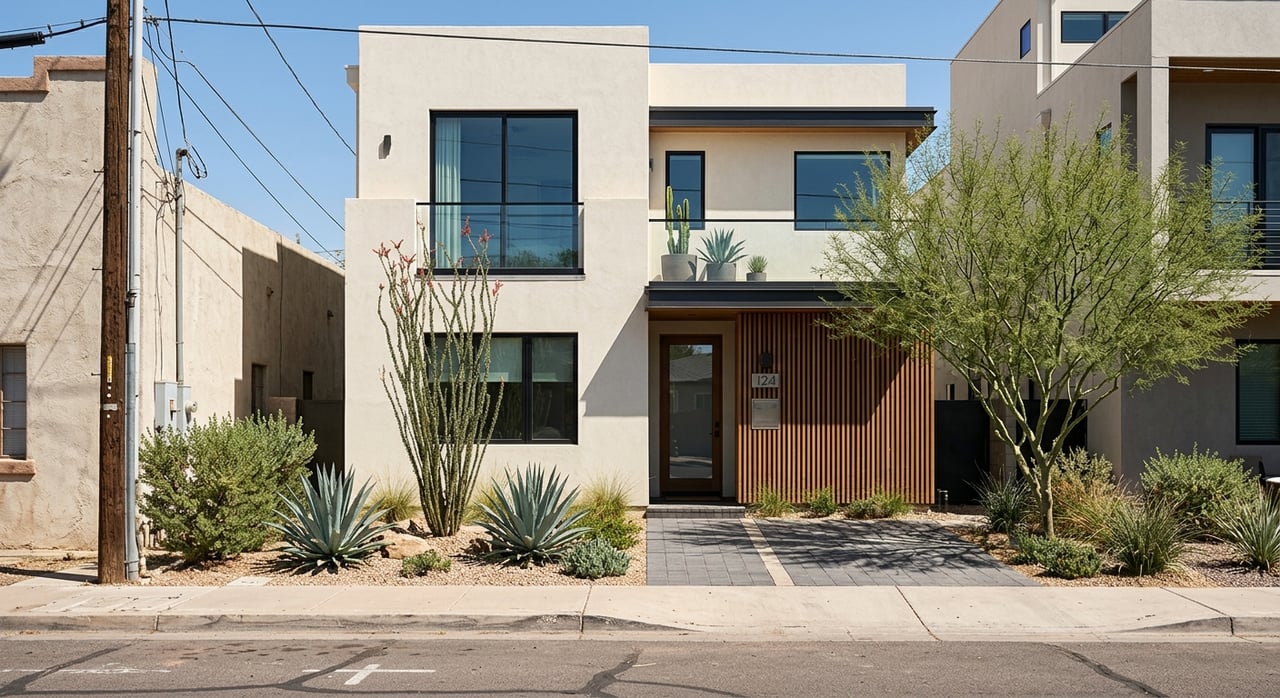
Trying to choose between a close-in luxury home and a sprawling estate in the Phoenix area? That decision usually comes down to more than square footage or finishes. You are really choosing between two different ways of living, and each one comes with its own tradeoffs in land, privacy, mobility, architecture, and long-term flexibility. If you are weighing central Phoenix infill against suburban estate communities, this guide will help you compare them with more clarity. Let’s dive in.
What Defines Each Option
In the Phoenix area, luxury infill homes are typically found in established central neighborhoods where location and neighborhood character carry real weight. City planning materials point to areas such as Alhambra, Encanto, Coronado, and other close-in corridors where older housing stock, existing infrastructure, and urban amenities shape the market.
By contrast, suburban estates are usually tied to low-density communities built around larger lots and more separation between homes. In this part of the Valley, that often means places like Paradise Valley and parts of north Scottsdale, where planning frameworks emphasize single-family residential use, privacy, and land.
Why Location Changes the Decision
If your priority is being close to employment centers, arts venues, neighborhood retail, and public amenities, central Phoenix tends to offer the stronger location story. Phoenix has actively supported infill, adaptive reuse, and walkable transit-oriented growth, which helps explain why luxury buyers continue to look closely at established urban neighborhoods.
If your priority is seclusion and a more resort-like residential setting, suburban estates often fit better. Communities like Paradise Valley and parts of Scottsdale are not built around urban density. They are built around land, low-scale development, and a quieter residential pattern.
Central Phoenix Infill Lifestyle
Luxury infill in central Phoenix is rarely just about the house itself. It is often about how the home connects you to the rest of the city. Encanto, for example, is tied to museums, theaters, and other urban amenities, while central-city planning has continued to support walkable districts around transit corridors.
For some buyers, that means a more efficient daily routine and better access to what they enjoy most. Valley Metro Rail operates 35 miles of light rail with 49 stations, running 365 days a year for more than 20 hours a day. If convenience, movement, and centrality matter, those details can shape your quality of life as much as the property itself.
Suburban Estate Lifestyle
Estate communities offer a different kind of value. Instead of focusing on proximity and walkability, they center on privacy, lot size, and a more insulated home environment. Paradise Valley’s official guidance describes the town as primarily single-family residential, with most land zoned R-43, which reflects one-acre lots.
That larger-lot pattern changes how a property feels on a day-to-day basis. You may have more distance from neighbors, more room for outdoor living, and a stronger sense of retreat. In areas like Paradise Valley, the surrounding lifestyle also leans toward resorts, golf, restaurants, and open-space-oriented amenities.
Lot Size Is Often the Biggest Divider
When buyers compare infill homes and estates, lot size is usually the clearest line between them. In Phoenix, typical single-family lots are often around 6,000 to 8,000 square feet, though some north-central subdivision patterns were built around roughly 10,000-square-foot lots. That means central Phoenix can range from compact parcels to unusually large close-in lots.
In estate communities, the scale changes quickly. Paradise Valley includes many one-acre lots, and Scottsdale planning materials for the Cactus Corridor describe low-density lots ranging from 35,000 square feet up to 2.5 acres. If you want land first and house second, suburban estates usually offer the cleaner fit.
Architecture and Housing Character
Central Phoenix generally offers more architectural variety. Depending on the neighborhood, you may find postwar ranch homes, bungalow-era properties, renovated classics, and newly built replacements. That mix is part of the appeal, especially if you value design character and want a property with a stronger sense of place.
Neighborhood context matters here. Alhambra is known for postwar ranch-style homes, the Murphy Bridle Path area includes large homes, and Coronado is tied to bungalow-era character. For a buyer who values architectural identity, central Phoenix can provide far more variety than a newer large-lot community.
Estate areas tend to be more consistent in feel because the planning pattern is more consistent. The appeal is less about historic housing stock and more about land, scale, privacy, and a cohesive low-density environment. If you prefer a home that reads as private and residential rather than urban and layered, estates often win that comparison.
Historic Rules Matter in Infill Areas
If you are considering an infill home in an older central neighborhood, due diligence matters. Phoenix’s Historic Preservation Office reviews exterior alterations and demolition for designated historic properties, so you should confirm whether a home has a historic designation or sits within an HP overlay before making assumptions about renovation plans.
That does not make historic homes a bad option. It simply means your remodel path may not be as open-ended as it first appears. In some cases, buyers may also find value in restoration opportunities, since the city offers exterior rehabilitation assistance for historic homes.
Mobility and Commute Considerations
For many relocating buyers, convenience becomes a major factor after the first few home tours. Phoenix’s mean travel time to work is 25.6 minutes based on the 2020 to 2024 ACS, and central locations can help you stay closer to downtown employment, cultural destinations, and transit.
That does not mean everyone should choose infill. It means you should think honestly about how often you want to drive, how much access matters, and whether a central location will improve your weekly routine. If you value easy movement around the city, infill has a clear advantage.
How Long-Term Value Differs
The value case for infill and estates is not the same, and that is where a lot of buyers benefit from a more analytical lens. In central Phoenix, long-term value often rests on scarcity, centrality, and reinvestment. City policies supporting infill, adaptive reuse, and transit-oriented development suggest continued attention to established neighborhoods.
In estate communities, value is more closely tied to land, privacy, view corridors, and low-density zoning. Paradise Valley’s general plan specifically supports preserving its primarily one-acre-lot, single-family character, while Scottsdale planning documents emphasize preserving desert character and low-scale development.
In simple terms, infill value often comes from being hard to replicate in the urban core. Estate value often comes from having land and a residential setting that planning policies are designed to protect.
Modification Potential Is Not Always Equal
One of the biggest mistakes luxury buyers make is assuming every property offers the same freedom to expand or rework. In infill neighborhoods, lot utility, neighborhood context, and historic review can all shape what is realistically possible.
In estate settings, the lot may be larger, but that does not always mean fewer rules. In Paradise Valley, hillside properties can face added review related to land disturbance, height, lighting, grading, drainage, and materials. If future changes matter to you, understanding the regulatory path is just as important as loving the lot.
Which Buyer Profile Fits Best
Central Phoenix infill usually makes the most sense if you prioritize:
- A close-in location
- Character and architectural variety
- Access to arts, museums, retail, and public amenities
- Better mobility and proximity to transit
- Scarcity tied to central neighborhoods
Suburban estates usually make the most sense if you prioritize:
- Larger lots and more outdoor space
- Privacy and separation from neighbors
- A quieter, low-density residential setting
- Resort, golf, and open-space-oriented surroundings
- Long-term value tied to land and protected zoning patterns
How to Make the Smarter Comparison
The right choice is rarely about which category is better in general. It is about which one matches your daily life, your long-term plans, and your risk tolerance around renovations or future changes. A beautiful central Phoenix property can be the wrong fit if you really want land and seclusion. A stunning estate can be the wrong fit if you want quick access to the city and a more connected routine.
The strongest purchase usually comes from matching the property’s site, architecture, and regulatory path to the planning framework around it. That is especially true in the Phoenix luxury market, where one home’s value may be driven by location and neighborhood fabric, while another is driven by acreage and low-density protection.
If you are deciding between a luxury infill home and a suburban estate in Phoenix, a finance-minded comparison can save you time and help you avoid buying the wrong lifestyle. Anthony Escobar can help you evaluate location, lot utility, privacy, long-term value drivers, and off-market opportunities across Phoenix, Paradise Valley, and Scottsdale.
FAQs
What is a luxury infill home in Phoenix?
- A luxury infill home in Phoenix is typically a high-end property in an established central neighborhood where value is driven by location, neighborhood character, existing infrastructure, and access to urban amenities rather than large land size.
How large are central Phoenix infill lots?
- Central Phoenix lots are often around 6,000 to 8,000 square feet, though some north-central subdivision patterns were built around roughly 10,000-square-foot lots and certain close-in properties can be larger.
What defines a suburban estate near Phoenix?
- A suburban estate near Phoenix usually refers to a low-density single-family property on a much larger lot, often in communities like Paradise Valley or parts of north Scottsdale where privacy and land are major selling points.
Are Paradise Valley estate lots usually larger than Phoenix infill lots?
- Yes. Paradise Valley is primarily single-family residential, and much of the town is zoned for one-acre lots, which is generally far larger than the lot sizes common in central Phoenix.
Do historic rules affect central Phoenix luxury homes?
- Yes. If a home has historic designation or is within an HP overlay, exterior alterations and demolition may be subject to review by Phoenix’s Historic Preservation Office.
Is central Phoenix better for commuting and mobility?
- For many buyers, yes. Central Phoenix offers stronger access to downtown employment, public amenities, and Valley Metro Rail, which runs 35 miles with 49 stations and service throughout the year.
What supports long-term value for Phoenix infill homes?
- Long-term value for infill homes is often tied to scarcity, centrality, architectural character, and continued city investment in existing neighborhoods through infill and adaptive reuse planning.
What supports long-term value for suburban estates near Phoenix?
- Long-term value for suburban estates is usually linked to land, privacy, view corridors, and planning policies that preserve low-density residential character in communities like Paradise Valley and Scottsdale.