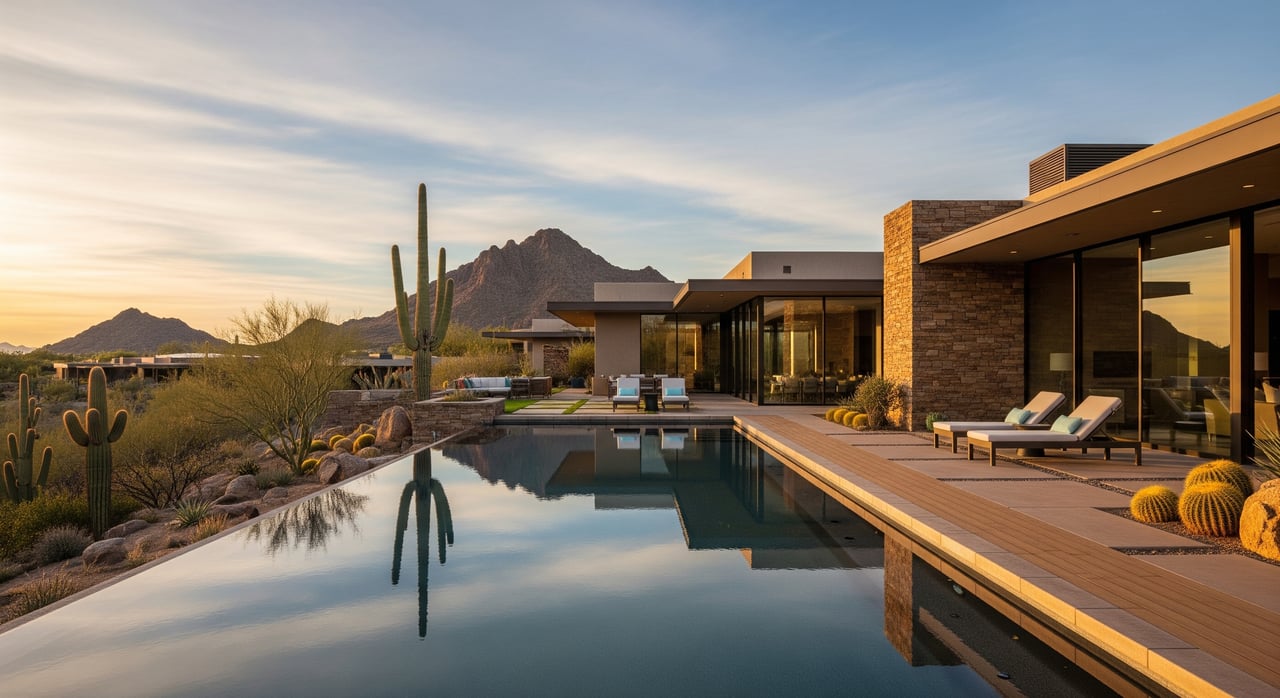
Why do two Scottsdale homes with similar square footage sell for very different prices? In the luxury tier, small details create big swings. You want clear, practical guidance that cuts through the noise and helps you price, buy, or upgrade with confidence. In this guide, you will learn the real drivers of value in Scottsdale’s high end and how appraisers and savvy buyers view each one. Let’s dive in.
What “luxury” means in Scottsdale
In Scottsdale, “luxury” is defined by the local market. Professionals typically treat luxury homes as the top 5 to 10 percent of sales by price in the immediate area. The exact number shifts by neighborhood and season, so you should use recent MLS distributions for your comps.
Demand in Scottsdale has local flavor. Winter brings an influx of second-home and snowbird buyers, which concentrates activity from late fall through early spring. The buyer mix often includes out-of-state and international purchasers, empty nesters, and relocating professionals. Interest rates still matter at the top end and can stretch time on market when borrowing costs rise.
On the supply side, truly comparable luxury sales are scarce. Each sale in a gated community or on a standout view lot can set the tone for nearby listings. New custom builds and fresh releases in ultra-premium communities often anchor pricing for their micro-markets, while large estate lots and hillside parcels stay scarce by design.
Location rules value
Scottsdale micro-markets at a glance
- Troon North / Pinnacle Peak: Mountain views, hiking access, and golf amenities. Appeals to buyers who want privacy and desert scenery.
- Silverleaf within DC Ranch: Ultra-high-end gated estates with private amenities. Finished lots, club access, and on-site services support premium pricing.
- North Scottsdale (broader area): Larger lots, custom homes, and estate or equestrian parcels with proximity to upscale retail and dining corridors.
- Old Town / Central Scottsdale: Walkability, restaurants, and nightlife. Smaller-lot luxury townhomes and condos trade differently than estates but command lifestyle premiums.
- Adjacent luxury markets: Paradise Valley and nearby borders can influence buyer search patterns. Appraisers and agents decide case by case whether to include them as comps based on product type.
Site and orientation premiums
Not all lots in the same neighborhood trade equally. Value shifts with:
- Street position: Cul-de-sacs and private drives can carry privacy premiums, while busy corners may discount value.
- Orientation: Morning and evening sun affect how usable your outdoor spaces feel in the desert. Orientation that protects patios and pools from harsh exposure is favored.
- Open space proximity: Direct adjacency or views to preserved desert, such as the McDowell Sonoran Preserve, adds buyer appeal and can justify a premium.
- Community services: Gates, guards, concierge, and optional club memberships expand the buyer pool and often lift pricing.
Lot and architecture
Lot size and usability
In the luxury tier, bigger is not always better if the land is steep, rocky, or full of easements. Buyers pay for usable outdoor living, including flat areas for pools, lawns, and courts. Hillside parcels can deliver exceptional views and strong premiums, yet higher build complexity and costs are priced into the land.
Style, size, and flow
Gross living area still matters, but finish quality and layout often outweigh raw square footage. High ceilings, open plans, and seamless indoor-outdoor transitions are top priorities in Scottsdale. Popular styles include Mediterranean, Spanish, contemporary, and desert contemporary. Homes with awkward flow or obsolete rooms face discounts even if the size looks competitive on paper.
Renovation and systems
At the luxury level, buyers expect high-end finishes. Incremental spend above local norms can have diminishing returns, so focus on function and market taste. Recent, well-documented upgrades to HVAC, roof, pool equipment, electrical systems, and smart-home infrastructure add confidence and reduce negative condition adjustments. Quality renovations completed in the past several years carry the most weight.
Views that trade at a premium
What counts as a top-tier view
Premium view types in Scottsdale include mountain ridgelines like Pinnacle Peak, McDowell Mountain, and Camelback, broad desert panoramas, golf-course frontage, and city or night-sky vistas. Rarity, permanence, and the share of nearby homes with a similar outlook all influence the size of the premium.
How value shows up in comps
Because view value is partly subjective, market pros look for paired sales to isolate the effect. They also describe view quality precisely in appraisal narratives. Expect discrete adjustments for view, separate from size and finish.
Amenities that move the needle
Buyers in Scottsdale place a premium on outdoor living and low-friction luxury.
- Core outdoor features: Resort-style pools and spas, covered patios, outdoor kitchens, shade structures, and mature desert landscaping with efficient irrigation.
- Indoor amenities: Large chef’s kitchens with commercial-grade appliances, spa bathrooms, wine rooms, theaters, smart-home systems, and zoned mechanicals.
- Estate-scale features: Guest casitas or ADUs, private sport courts, equestrian facilities, and expanded garages or workshops can target specific buyer cohorts and justify higher pricing.
- Service-linked value: Private club access, on-site concierge, security, and membership options can expand demand in certain segments.
How appraisers and buyers price luxury
The appraisal toolkit
Appraisers rely on the Sales Comparison Approach as the primary method, then use the Cost Approach for land or new construction support and the Income Approach only when a property is income producing. In the luxury tier, the quality of comparable sales and the appraiser’s narrative carry extra weight because the market is thin.
Common adjustments
- Location: Submarket premiums, like Silverleaf versus broader North Scottsdale, show up as specific adjustments.
- Size and utility: Price per square foot is less reliable on its own at the top of the market. Layout, ceiling height, and indoor-outdoor flow influence adjustments.
- Condition and renovation: Effective age matters. Documented, recent upgrades reduce negative adjustments.
- View: Often a separate line item quantified through paired sales where possible.
- Amenities: Pools, guest houses, and memberships are valued using nearby sales with and without the feature.
- Time: In changing markets, older comps are time-adjusted to the appraisal date.
Cross-market pitfalls
Unique architecture, nonstandard lots, and rare amenities complicate direct matching. Pros may test comps from nearby luxury markets like Paradise Valley when product types align, then explain differences carefully. Agents sometimes include aspirational new-build comps for pricing strategy, while appraisers must reconcile to closed sales.
Action plans for sellers and buyers
Seller playbook checklist
- Gather permits, invoices, and warranties for recent upgrades, including MEP systems, roof, pool equipment, and kitchen or bath remodels.
- Build a comp set inside your micro-market. Note important differences like lot size, view, renovation dates, and community services.
- Stage and photograph outdoor living to show sun protection, shade structures, and cooling features.
- Prioritize targeted updates buyers notice: new pool equipment, modernized HVAC controls, upgraded outdoor lighting, and refreshed high-wear flooring.
- Prepare HOA documents and club membership terms so buyers understand fees and transfer options.
Buyer due diligence checklist
- Confirm usable lot area and setbacks, not just total acreage. Verify easements and building envelopes.
- Request ages and maintenance histories for roof, HVAC, pool, and electrical systems.
- Ask for paired sales or close comps that show how view, golf frontage, or lot position premiums were realized.
- Test the home’s functional flow against your needs, including guest casita privacy and office space.
- For gated or club communities, verify membership availability, initiation costs, and ongoing fees.
The bottom line for value
Location sets the floor, views and lot position push the ceiling, and renovation quality plus amenities determine where you land in between. In Scottsdale’s luxury tier, the best outcomes come from evidence-based pricing, a clear micro-market narrative, and documentation that reduces uncertainty for appraisers and buyers.
Ready to evaluate, price, or buy with a finance-first strategy tailored to your submarket? Connect with Anthony Escobar for a data-driven plan and discreet execution.
FAQs
How is “luxury” defined in Scottsdale pricing?
- Professionals typically define luxury as the top 5 to 10 percent of local sales by price, set using recent MLS distributions for the immediate area.
Why do winter months affect luxury home values in Scottsdale?
- Scottsdale attracts snowbird and second-home buyers who concentrate activity from late fall through early spring, which can increase competition and influence pricing.
Do views like Pinnacle Peak or Camelback always add a set premium?
- There is no universal percentage. The premium depends on rarity, permanence, and local buyer demand, which appraisers quantify using paired sales when possible.
What renovations matter most for luxury buyers and appraisals?
- Recent, well-documented upgrades to mechanical systems, roof, pool equipment, and functional kitchen or bath renovations carry more weight than purely cosmetic changes.
How do appraisers adjust for location within Scottsdale?
- They separate submarket premiums, such as Silverleaf versus broader North Scottsdale, then adjust for specific site traits like orientation, privacy, and proximity to open space.
Are pools, guest houses, or club memberships always additive to value?
- These features usually broaden appeal, but their impact depends on the micro-market and ongoing costs. Appraisers look to nearby sales with and without the amenity.
Should comps include sales from Paradise Valley when pricing a Scottsdale home?
- Only when the product type aligns. Cross-market comps require clear justification and careful explanation of differences in community services, lot types, and buyer pools.